
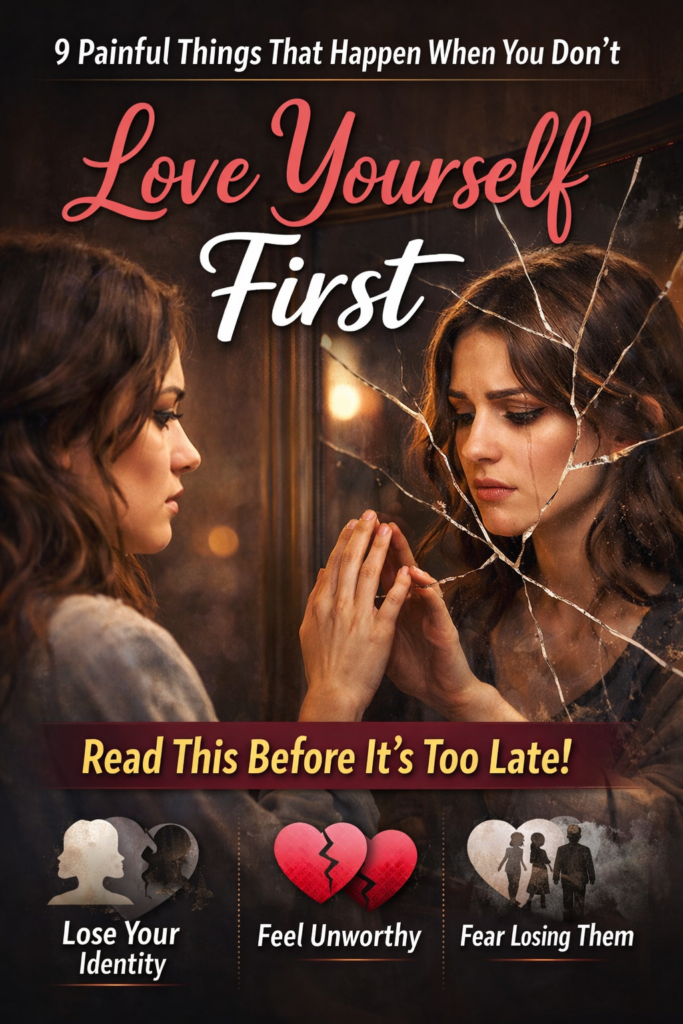
If you don’t love yourself first, you will always feel incomplete in love
Often, we do not even realize that while bringing light into the lives of others, we push our own lives into darkness.
There is a version of you…
that existed before you started loving them.
A version that smiled easily. That didn’t overthink every message. That didn’t wait for someone’s attention to feel okay. That didn’t question her worth every single day.
She was not perfect. She had her flaws, her fears, her insecurities.
But she had something you didn’t realize was so important—
She had herself. And then… someone entered your life. At first, it felt beautiful.
You felt seen.
You felt chosen.
You felt like maybe… finally… someone understands you.
The late-night conversations felt magical.
The small efforts felt meaningful.
The way they looked at you made you believe… this is real.
And without even realizing it… you started giving more.
More time.
More attention.
More emotional energy.
You started prioritizing them. You adjusted your schedule to be there for them, staying up later just to chat. You put their needs before your own because they felt more important, and oddly enough, it didn’t seem wrong at all.
It felt like love.
Because no one ever taught you the difference between loving someone… and losing yourself while loving them.
Slowly, things started changing. Not suddenly. Not dramatically.
Just… slowly.
They became a little distant. Their replies became shorter. Their effort became inconsistent. And suddenly… the same love that once felt warm…
started feeling confusing.
You started overthinking.
“Did I do something wrong?”
“Why are they behaving like this?”
“Am I not enough anymore?”
You tried harder. You gave more. You adjusted more. You stayed silent about things that hurt you… just to avoid losing them.
And that’s where it began.
Not the heartbreak.
Not the ending.
But something far more painful—
The slow loss of yourself.
You stopped doing things that made you happy. You stopped expressing how you truly felt. You started becoming someone easier to love… instead of being yourself. “When you don’t love yourself first, relationships start affecting your emotional health.”
And one day… you looked at your life and realized—
You were still there…
but you didn’t feel like yourself anymore. Because when you don’t love yourself first, you don’t just fall in love with someone else…
You slowly fall out of love with yourself.
And the saddest part? You don’t even realize how much you’ve lost… until you feel completely empty.
This blog isn’t just about relationships—it’s also about the quiet harm that can happen inside you when you forget to prioritize yourself and remember to love yourself.
Table of Contents
1. What Happens When You Don’t Love Yourself First in a Relationship
At first, you had standards.
You knew what you wanted.
You knew how you deserved to be treated. You believed you deserved effort, respect, consistency.
But when you don’t love yourself…
those standards slowly begin to fade.
Not all at once. Little by little.
You accept a delayed reply… because they’re “busy.”
You ignore a rude tone… because they’re “stressed.”
You excuse their absence… because “they’ll come back.”
You start justifying things that once felt unacceptable. And you don’t even realize it. Because your focus shifts.
Instead of asking:
“Are they treating me right?”
You start asking:
“How can I make this work?”
You begin to adjust your expectations to match their behavior. You lower your needs… just to keep them. (Have you ever wondered if they have ever lowered their expectations or need for you? It’s a thoughtful question to reflect on)
And somewhere deep inside… you know something is wrong. But you ignore it. Because losing them feels more painful than losing your standards.
“The moment you stop respecting your own worth… is the moment others start treating you like you have none.”
2. Your Happiness Starts Depending on Them (Signs You Don’t Love Yourself First)
Before them, your happiness was simple.
You could enjoy your own company.
You could laugh without needing someone else.
You could feel okay… just being you.
But now?
Everything depends on them.
At first, you don’t notice it happening.
It feels harmless… even beautiful.
You feel happy when they text you.
You smile when you see their name on your screen.
Your mood instantly lifts when they give you attention.
And slowly, without realizing it… your happiness begins to shift.
If they text—you feel happy.
If they don’t—you feel anxious.
If they care—you feel secure.
If they pull away—you feel broken.
Your emotions are no longer yours. They are controlled by someone else’s behavior.
You check your phone again and again.
You wait for their message like it’s the only thing that can calm your heart. And when it doesn’t come? Your mind starts racing. That same heart that felt so full just a few hours ago… suddenly feels heavy.
You start overthinking—
“Are they ignoring me?”
“Did I say something wrong?”
“Are they losing interest?”
You feel uneasy.
Your energy fades.
You feel… dependent.
You feel restless.
Because now, your happiness is no longer in your control.
It depends on how they treat you.
On how much attention they give you.
On how present they are in your life.
And this is where love quietly turns into emotional dependency.
You’re no longer just loving them…
you’re needing them to feel okay.
You start waiting for their messages like they’re the only thing that can fix your mood.
You start adjusting your emotions according to their behavior.
You feel high when they’re close… and low when they’re distant.
And the most painful part?
You might find it harder to experience happiness on your own. The things that used to bring you peace might not feel the same anymore. Your world could start feeling smaller, focusing more on just one person.
And without even realizing it,
you’ve given someone else the power to control how you feel.
“When your happiness depends on someone else, you slowly lose yourself trying to keep them.”
3. You Slowly Lose Your Identity (Until You Don’t Recognize Yourself Anymore)
At first, it might not seem like you’re losing yourself it feels more like you’re making adjustments, trying to make things work, and being understanding in love.
You find yourself making small changes almost automatically. Maybe you start liking what they like, avoiding things they don’t enjoy, changing your habits, your routine, even the way you express yourself—all to keep things smooth between you both.
"Learning to Love Yourself First is the foundation of self-respect."You tell yourself this is normal, that it’s what caring makes us do. But gradually, those tiny changes can add up. You kept loving them… but forgot to love yourself first, and that’s where everything started falling apart.
You might start holding back your opinions because you want to avoid arguments, or hide your true feelings so you don’t seem “too much.” You become more cautious with your words, quieter with your emotions, and more agreeable—sometimes even when it doesn’t quite feel right inside.
Slowly, you might find yourself shrinking parts of who you are just to fit into the space they’re comfortable with. The things that once brought you joy begin to fade, not because you love them any less, but because you’ve stopped choosing them consciously.
Your world starts to revolve around just one person, and in that process, you might forget to stay connected to your true self. And one day, without warning, you pause and realize—you no longer recognize yourself. The girl who once had her own thoughts, her unique voice, her confidence… feels like a distant memory.
Because somewhere between caring for someone and trying to keep them close, you gently lose touch with who you really are.
You gave so much space to someone else…
that there was no space left for you anymore.
- Stop begging for love… learn to love yourself first.
4. You Stay in Situations That Hurt You When You Don’t Love Yourself First
You can feel it—every single day—that something isn’t quite right, that how you’re being treated isn’t what you truly deserve, and that the love you’re giving might not be being returned in the way you hope… yet, you stay.
It’s not because you don’t see the truth, but because facing it feels more painful than ignoring it.
You hold on tightly to the good memories, reminiscing about how things used to be, convincing yourself that maybe if you try a little more, love a little harder, or stay a little longer, things will return to that better time.
You tell yourself it’s just a phase, that they’re stressed, that relationships need patience, and gradually, you begin to accept what once would have broken your heart in an instant. You start making excuses for their behavior, silencing your own hurt, and choosing fleeting comfort over lasting peace.
The moment you love yourself first , you stop tolerating disrespect.
Leaving feels heavy—not just because of them, but because of everything you’ve invested: your time, your emotions, your hopes, and the dream of a future you had begun to believe in.
The idea of starting over feels overwhelming being alone seems unfamiliar, so you choose to stay in something that’s slowly draining you, thinking it’s easier than walking away.
But deep down, you know the truth—you’re not staying because it’s right, but because you’re afraid. Afraid of the emptiness that might follow, afraid of letting go of what once was, and afraid of facing life without them.
In trying to avoid that fear, you end up choosing a pain that repeats itself every day—quietly taking pieces of you until one day, you realize that staying didn’t protect you ,it slowly broke your spirit.
” You didn’t stay because it felt right… you stayed because leaving felt harder than breaking.”
5. You Start Seeking Validation for Everything (Because You Don’t Feel Enough Inside)
Sometimes, you find yourself doubting your own worth and searching for reassurance in others’ words, their attention, or reactions—almost like you need constant confirmation that you matter.
You may notice how often you wait for kind words or how a simple message from someone can make you feel better, while their silence can suddenly make you question everything about yourself.
You might overthink small details, reread conversations, analyze their tone, and wonder if you did something wrong—even when nothing actually happened. Asking for clarity repeatedly can become a habit, not because you want to, but because you don’t feel secure without it. Compliments and reassurance can feel fleeting, and no matter how many times someone tells you you’re important, it may not fully settle inside.
So, you keep seeking more—more attention, more effort, more proof—hoping that someday it will finally feel enough. But instead of finding satisfaction, you might feel more anxious, more unsure, and more reliant on others.
Over time, you could start to depend on how they treat you, how they respond, and how they make you feel. Beneath it all, there’s often a quiet emptiness—a feeling that you’re not enough on your own—and instead of filling that space with self-love, you might try to fill it with someone else’s approval.
Remember, true confidence and love come from within. No amount of external praise can match that amazing inner sense of self-worth, a special feeling only you can cultivate and cherish. Trust in yourself and treasure that unique strength inside you.
IF YOU CAN'T LOVE YOURSELF FIRST, DON'T COMPLAIN ABOUT BEING TREATED LIKE AN OPTION. 6. You Fear Losing People Who Don’t Even Value You Properly
Somewhere along the way, you become more afraid of losing them than losing yourself, even when deep inside you know they are not treating you the way you deserve.
You start holding on tightly to someone who barely holds on to you, convincing yourself that their presence—even if inconsistent, even if confusing—is better than their absence.
You ignore the way they overlook your feelings, the way they don’t prioritize you, the way they show up only when it’s convenient for them, because the thought of them leaving completely feels unbearable.
You begin to silence your needs, hide your expectations, and accept things you once promised you never would, just to avoid giving them a reason to walk away. You become careful with your words, scared to express how you truly feel, worried that being honest might push them further away.
And instead of asking, “Do they deserve a place in my life?” you keep asking, “What can I do to make them stay?” You start chasing their attention, adjusting your behavior, lowering your standards—slowly turning into someone who is trying to be enough for a person who never truly sees your worth.
And the hardest part is, you’re not even holding on to how they treat you now… you’re holding on to who they used to be, or who you hope they could become. But in that hope, you might overlook your current reality, which is so important to acknowledge.
You stay connected to someone who doesn’t value you properly, not because you don’t see the truth, but because you’re afraid that letting them go will leave a space you don’t know how to fill.
And in trying so hard not to lose them, you keep losing pieces of yourself—until one day you realize, the person you were afraid to lose was never holding you the way you deserved to be held.
Being with someone who doesn’t genuinely value you is lonelier than being alone.
7. You Start Believing Love Is Supposed to Hurt
After experiencing the same cycle multiple times, it’s easy to start believing that love is inherently painful. You might think that overthinking, crying, feeling anxious, and constantly questioning yourself are just normal parts of being in a relationship. Remember, you’re not alone in these feelings, and with time, things can feel different.
You stop seeing these feelings as warning signs and start accepting them as something you simply have to deal with if you want to be loved.
You tell yourself that every relationship has problems, that nobody is perfect, that maybe this is just how love feels in reality.
And without even realizing it, you start normalizing emotional exhaustion. The sleepless nights, the constant doubts, the heaviness in your chest—they don’t shock you anymore, they become familiar.
You begin to confuse intensity with love, thinking that the emotional highs and lows mean something is deep and real, when in truth, it’s just instability. You start believing that if it doesn’t hurt, it’s not strong enough, that if you’re not fighting for it, it’s not worth it.
And slowly, your idea of love changes—not into something peaceful and secure, but into something that feels like a struggle you have to survive. You stop expecting consistency, you stop expecting reassurance, you stop expecting to feel safe, because you’ve convinced yourself that love is supposed to be complicated and painful.
But deep down, there’s still a small part of you that knows this isn’t how it should feel—that love shouldn’t leave you drained, confused, or constantly questioning your worth.
Yet you ignore that voice because pain has become so familiar that it starts to feel like love, and that’s where you lose the ability to recognise what real, healthy love actually looks like.
CHOOSE YOURSELF. ALWAYS 8. You Stop Trusting Yourself (And Your Inner Voice Fades Away)
Your intuition tells you something is wrong, your inner voice is still there—soft but clear—telling you that something doesn’t feel right, that the way you’re being treated isn’t okay, that you’re hurting more than you should.
But instead of listening to it, you start questioning it. You tell yourself you’re overthinking, you’re being too sensitive, you’re imagining things that aren’t really there. Slowly, you begin to trust their words more than your own feelings, their explanations more than your instincts, their version of reality more than your own experience.
Whenever you feel hurt, it’s common to try to justify those feelings instead of fully accepting them. Similarly, when your intuition tries to guide and protect you, you might find yourself silencing it because you’re worried about things falling apart. Remember, acknowledging your feelings and listening to your inner voice can be a gentle step toward healing and understanding.
And with time, that voice—the one that once guided you, protected you, warned you—starts fading. You no longer feel confident in your own decisions, you hesitate before expressing how you feel, you doubt your own judgment even when your heart is clearly uncomfortable.
You start needing someone else to tell you what’s right and what’s wrong, because you no longer trust yourself to know the difference.
And that’s one of the deepest losses—not losing them, but losing the connection with yourself.
Because when you stop trusting your own voice, you become more vulnerable to accepting things that don’t align with your truth, and you keep moving further away from the one person who was always meant to guide you—yourself.
9. You Give Everything… But Still Feel Empty Inside
You try so hard… you really do.
You give your time, your attention, your care, your patience—you show up again and again, even on days when you’re already exhausted. You listen to them, understand them, support them, love them in every way you can, thinking that maybe if you give enough, it will finally feel complete… like something inside you will settle.
But it doesn’t. Instead, there’s this quiet emptiness that stays with you, no matter how much you give. You smile when you’re with them, you act normal, but deep inside, something feels missing—and you can’t fully explain what it is.
You start wondering why, after doing everything right, after loving so deeply, you still feel so unfulfilled. And the truth is, it’s not because you didn’t give enough… it’s because you gave everything to someone else while leaving nothing for yourself.
You put all your energy out into the world, hoping it would circle back to you as love. But that space inside you—the one that needs your own care, attention, and love—still remains untouched, waiting to be nurtured.
And no matter how much someone else tries, they can never fill a place that you’ve abandoned within yourself. So you keep giving, thinking one day it will feel enough… but until you start choosing yourself too, that emptiness quietly stays, reminding you that love isn’t just something you give—it’s something you also need to give to yourself.
Conclusion :
How to start loving yourself again?
There comes a moment—quiet, almost unnoticeable at first—when something inside you finally shifts
You get tired, not just physically, but emotionally… tired of overthinking, tired of trying so hard, tired of feeling like you have to earn the love you were always ready to give so freely. And for the first time, you stop running after answers from others and start sitting with yourself.
You begin to see things clearly—not through hope, not through attachment, but through truth. You realize how much you ignored, how much you tolerated, how much of yourself you gave away just to feel loved.
And instead of blaming yourself, you start understanding yourself. You understand that you weren’t weak—you were just trying to love with a heart that didn’t yet know its own worth.
And slowly, gently, you start choosing yourself. You stop forcing conversations, you stop chasing people, you stop explaining your value to those who never tried to see it.
You begin to protect your peace, even if it means letting go of people you once thought you couldn’t live without. It doesn’t feel easy, and it doesn’t happen overnight, but it feels right.
Because for the first time, you’re not choosing love that confuses you—you’re choosing a life that respects you. And in that choice, everything begins to change.
You start feeling lighter, calmer, and more in control of your emotions. It’s a beautiful journey as you gradually rebuild the relationship with yourself—the most important one of all.
And that’s when you realize… the love you were searching for outside was always waiting for you within.
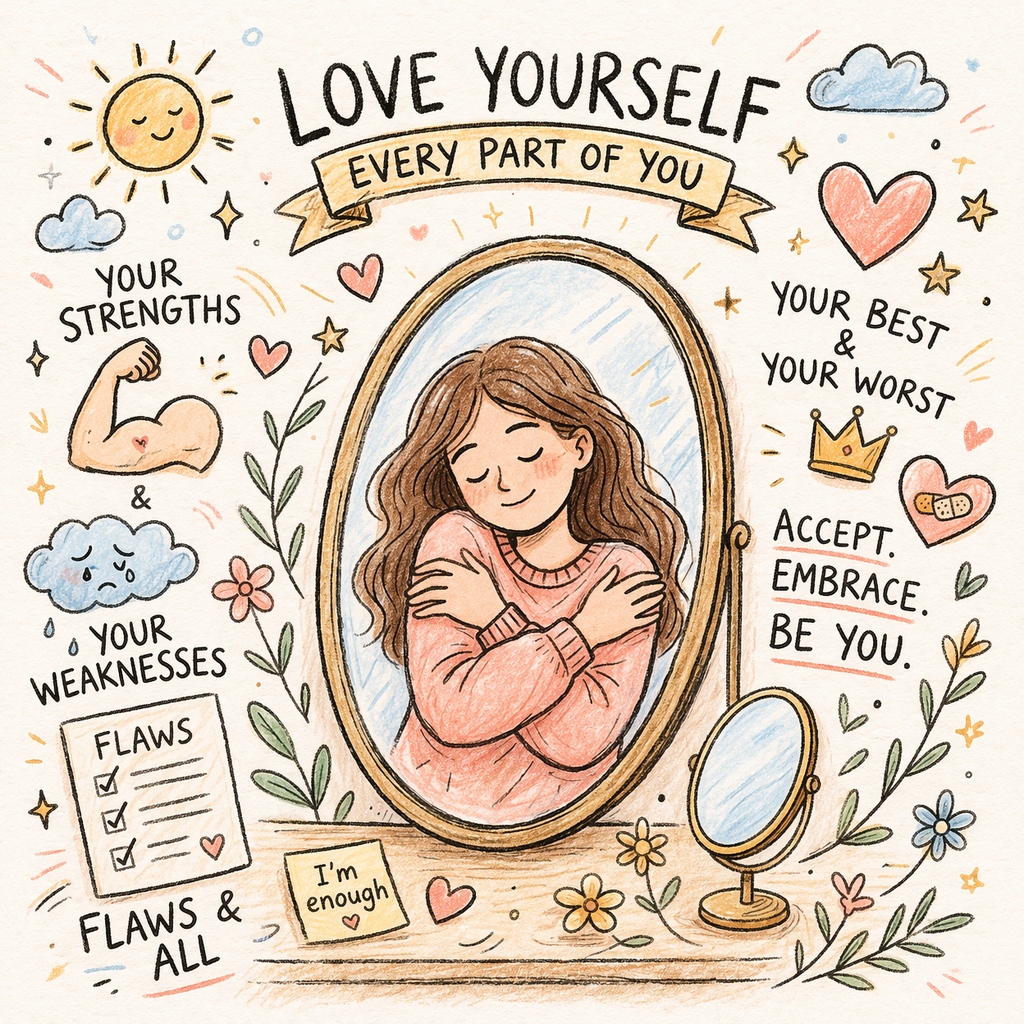
You don’t need to be perfect to love yourself. It means accepting every part of who you are—your strengths and your struggles, your best moments and the ones you’re not proud of. It’s about being honest with yourself, embracing your flaws instead of hiding them, and feeling comfortable in your own skin without wishing to be someone else.
“The moment you choose yourself… is the moment you stop accepting a love that feels less than what you deserve”
If you truly want peace in your life, you need to love yourself first before anyone else.
This blog truly warmed my heart ❤️. You gave a really genuine and relevant explanation of the significance of self-love. Many people choose to overlook these issues until it’s too late, but your remarks genuinely cause one to think. All of the points felt genuine and important. 🌸✨”
Thankyou so much 🙂