
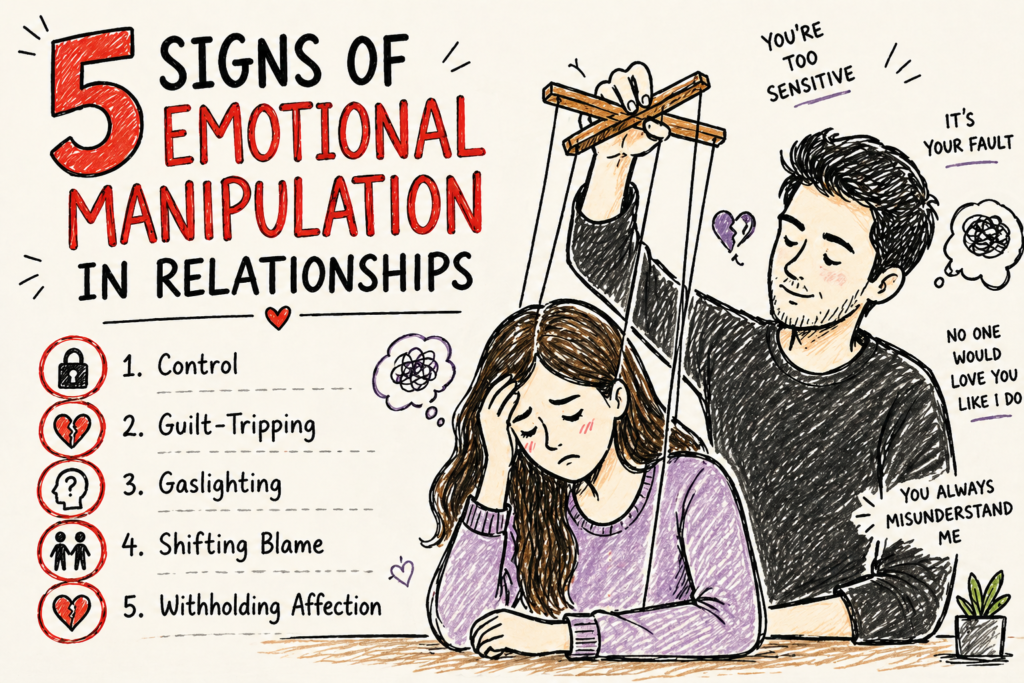
Emotional manipulation in relationships is more common than you think, and many people don’t even realize they’re being controlled until it starts affecting their self-worth.Let’s take a moment to be honest with ourselves. Love should never leave you feeling unsure about your own reality. It shouldn’t make you feel less or diminish your confidence each week. Yet, so many people find themselves in relationships where something just doesn’t feel right — but they struggle to put their finger on it.
That’s the tricky thing about emotional manipulation. It doesn’t walk through the door wearing a label. It doesn’t announce itself. It creeps in slowly, disguised as concern, wrapped in affection, hidden behind words like “I’m only saying this because I care about you.”
And before you know it, you’re apologizing for things you didn’t do, doubting memories you know are real, and wondering if maybe — just maybe — you really are the problem.
You’re not the problem. But you do need to recognize what’s happening.
Emotional manipulation doesn’t always have to be loud and obvious. Often, it’s subtle and quiet, sometimes showing itself through silence, tears at just the right moment, or even through someone who cares deeply for you but also craves control.
Many people fail to recognize emotional manipulation in relationships because it often starts in subtle ways that feel like care or concern.
Here are five signs that could indicate you’re being emotionally manipulated.
There’s no intention to scare you or make you paranoid—my goal is simply to help you find the words for that little voice in your gut that might already be warning you.
Table of Contents
1. They Make You Question Your Own Memory
This has a clinical name — gaslighting — but let’s set aside the fancy term for just a moment. What it really feels like is this: you vividly remember a conversation, word for word. You know exactly what was said.
Yet, the other person looks you directly in the eyes and insists, “That never happened. You’re imagining things.”
And they say it with such confidence that you actually pause. You think, wait — did I make that up? Am I remembering wrong?
You weren’t remembering wrong. They just need you to believe you were.
This happens gradually. First it’s small stuff. “I never said I’d pick up groceries.” Then it’s bigger. “I never called you that name, you’re being dramatic.” Over time, you stop trusting your own brain. You start checking yourself constantly.
You hesitate before speaking because you’re scared of being “wrong” again.
That hesitation? That’s not a personality flaw. That’s the result of someone repeatedly dismantling your confidence in your own perception. Nobody who genuinely loves you would want you to doubt your own mind.
👉 If you’re struggling with your self-worth, you can also read this:
“5 Subtle Signs Your Self-Esteem Is Lower Than You Think”
2. They Use Your Emotions Against You
An emotional manipulator pays very close attention to what makes you tick. Your insecurities. Your fears. The things you told them at 2 AM when your guard was completely down. And then, during an argument or whenever they need leverage, they pull those things out like weapons.
“Maybe that’s why your ex left you too.”
“You always do this — your mom was right about you.”
“No wonder you don’t have close friends.”
These aren’t accidents. These are calculated strikes aimed at the softest parts of you — parts you only exposed because you trusted them. A healthy partner holds your vulnerabilities with care. A manipulative one stores them like ammunition, waiting for the right moment to fire.
If you’ve ever walked away from an argument feeling gutted — not because the topic was heavy, but because they said the one thing they knew would destroy you — pay attention to that pattern.
Understanding emotional manipulation in relationships is important if you want to protect your mental and emotional well-being.3. Everything Is Always Your Fault
You raised a true concern. Perhaps they overlooked something important or said something hurtful in front of your friends. Yet, somehow, by the end of the chat, you’re the one who ends up apologizing.
How did that happen?
Manipulators are experts at flipping the script. You say, “It hurt me when you did that.” They respond with, “Well, maybe if you didn’t act like that, I wouldn’t have to.”
Suddenly the conversation isn’t about what they did anymore. It’s about what you apparently provoked.
This cycle repeats until you stop bringing things up altogether. You swallow your feelings. You edit yourself. You shrink. Because every time you try to express something real, it gets turned around and thrown back at you.
Accountability becomes a one-way street. They never own anything. You own everything — including things that were never yours to carry.
4. They Control You Through Guilt
“After everything I’ve done for you, this is how you treat me?”
“Go out with your friends. I’ll just sit here alone. It’s fine.”
“I guess I’m just not important enough.”
Does this sound familiar? Guilt-tripping has been a classic manipulation tactic for ages, and it works because most caring people truly don’t want to hurt those they love. So, when your partner turns every boundary you set into a personal betrayal, it’s easy to feel compelled to give in.
You might cancel plans, stop saying no, and gradually reshape your whole life just to keep them comfortable. Remember, your feelings and boundaries matter much too.
But here’s what nobody tells you — a person who truly respects you will never make you feel guilty for having a life outside of them. Your independence is not a threat to a secure relationship.
If someone treats it like one, that says everything about their need for control and nothing about your loyalty.
5. They Punish You With Silence
Not every manipulator yells. Some go completely quiet. They withdraw affection, ignore your texts, give you the cold shoulder for days — and they never tell you why.
You’re just supposed to figure it out. You’re supposed to chase them, beg them, fix whatever invisible thing you apparently broke.
This is called the silent treatment, and people often brush it off as “needing space.” But there’s a massive difference between someone saying, “Hey, I need a few hours to cool down, I’ll come back to this conversation later” — and someone vanishing emotionally to punish you into submission.
One is communication. The other is control.
The silent treatment forces you into a constant state of anxiety. You walk on eggshells. You monitor their mood like a weather forecast. You become so focused on avoiding their withdrawal that you forget what your own emotional needs even look like.
Breaking free from emotional manipulation in relationships requires awareness, courage, and self-respect.Emotional manipulation is a form of psychological control, as also explained by experts on Psychology Today.Emotional Manipulation in Relationships: What You Should Never Ignore
Look — reading this list might bring up uncomfortable feelings. You might recognize one sign or all five. This doesn’t mean your relationship is doomed, nor does it make your partner a villain.
People often develop manipulative behaviors from their childhood without realizing it. Awareness is important. Identifying the pattern is crucial because you can’t fix what you don’t acknowledge.
If someone consistently makes you feel crazy, guilty, small, or afraid to speak — that is not love being “complicated.” That is something else entirely. And you deserve to know the difference.
Believe in yourself and trust that special gut feeling that guided you here. Your instincts have been reaching out to you for a little while now, so maybe it’s finally time to listen to them.
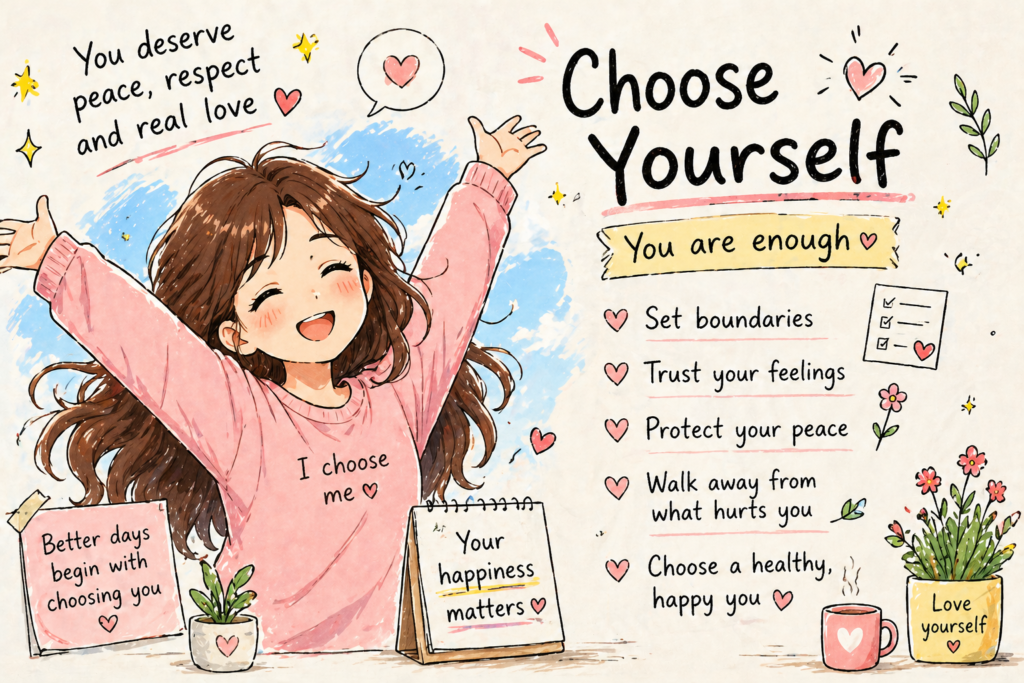
If you often find yourself saying yes when you actually want to say no, you might be losing yourself in the process.
👉 How to Stop Being a People Pleaser (Before You Lose Yourself Completely)